

If you have never had your hearing tested, the idea of booking that first appointment can feel like a big step. Most people put it off for years. In fact, research consistently shows that the average person waits seven to ten years from first noticing hearing changes to actually doing something about it.
Here is the reassuring truth: a hearing test is one of the easiest health appointments you will ever have. It is painless, there are no needles, nothing goes wrong if you "fail," and you leave with real answers. This article walks you through exactly what happens when you visit Alto Hearing, so you know what to expect before you arrive.
Why So Many People Wait
Hearing loss is usually gradual. It creeps in over years, so your brain quietly adapts and you stop noticing the sounds you are missing. Instead of thinking "I cannot hear well," most people think "everyone keeps mumbling" or "restaurants are just too noisy these days."
The trouble is that waiting has a cost. Untreated hearing loss is linked to greater listening fatigue, social withdrawal, and added strain on memory and concentration, because your brain has to work harder to fill in the gaps. The good news is that a simple test removes the guesswork, and catching changes early gives you far more options. A baseline test is valuable even if your hearing turns out to be perfectly normal.
Before Your Appointment
There is nothing you need to do to prepare, but a few things help us give you the most accurate picture:
- Think about the situations where you struggle most. Restaurants? Phone calls? The TV? Group conversations? The more specific you can be, the better.
- If possible, bring a spouse, family member, or friend. A familiar voice is useful during testing, and two sets of ears help when reviewing results.
- Make a quick note of any medications you take and any history of ear infections, surgeries, or noise exposure at work or in hobbies.
- If you want a head start, you can take our quick online hearing screening from home before you come in.
Step 1: A Conversation About Your Hearing
Your appointment begins with a conversation, not a test. We will ask about your hearing history, your health, your work and hobbies, and the listening situations that matter most in your life. A farmer who spends hours around machinery has different needs than a retired teacher who loves choir practice, and your story shapes everything that follows.
This is also your chance to ask questions and tell us what prompted the visit. Nothing here is a trick or a judgment. The clearer the picture you give us, the more useful your results will be.
Step 2: A Look Inside Your Ears
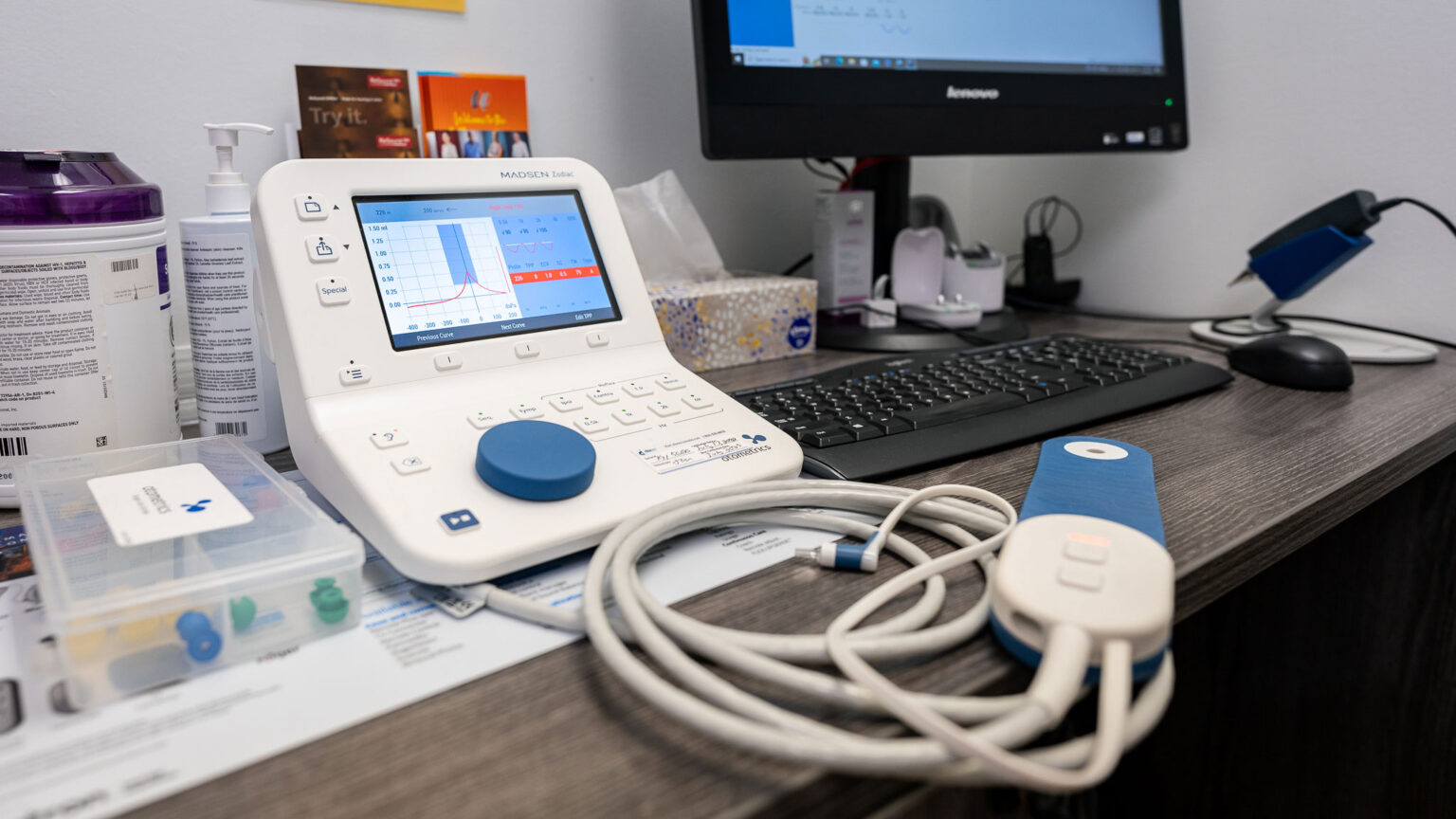
Next, we examine your ear canals with an otoscope, a small handheld light. We are checking for wax buildup, irritation, or anything else that could affect your hearing or the test results. Sometimes the culprit behind muffled hearing is simply wax, and that is a quick fix.
Step 3: The Hearing Test Itself
You will sit in a quiet sound booth wearing headphones. This controlled environment lets us measure your hearing precisely. The testing typically includes:
- Pure tone testing: You press a button or raise your hand whenever you hear a beep. The tones vary in pitch and volume, which maps out the softest sounds you can hear across the speech range.
- Speech testing: You repeat words played at different volumes. This tells us how well your ears and brain work together to understand speech, not just detect sound. It is often the part that explains why noisy rooms feel so hard.
There are no wrong answers. Just respond to what you genuinely hear, and do not worry if some tones are very faint. That is exactly what we are measuring.
Step 4: Reviewing Your Results Together
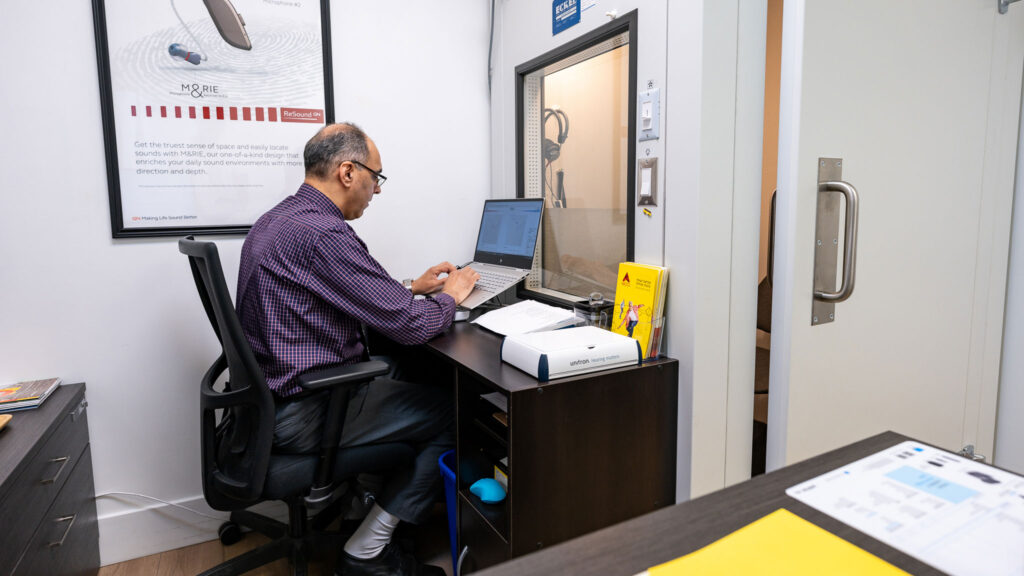
Your results are plotted on an audiogram, a simple chart showing your hearing across pitches in each ear. We will walk you through it in plain language: what is in the normal range, what is not, and what it means for everyday listening such as conversations, phone calls, and television.
If your hearing is fine, wonderful. You leave with a baseline we can compare against in future years. If we find hearing loss, we will explain your options without pressure. That may include hearing aids, hearing protection strategies, or simply monitoring and rechecking down the road.
How Long Does It All Take?
Plan for about 45 to 60 minutes from the time you sit down to the time you leave with answers. Many patients tell us afterward that the hardest part was booking the appointment.
Will I Need Hearing Aids?
Not necessarily. A hearing test is an assessment, not a sales pitch. Plenty of people come in, learn their hearing is healthy, and simply establish a baseline. Others discover mild changes that only need monitoring. If hearing aids would genuinely help, we will say so and explain why, then match any recommendation to your hearing, your lifestyle, and your budget. The decision is always yours, and there is never any pressure to buy on the day.
Who Should Get Tested?
We recommend a baseline hearing test for all adults by age 50, and annual checks after that. You should book sooner if you notice yourself asking people to repeat themselves, turning the TV up louder than others prefer, struggling to follow conversations in noisy rooms, or hearing ringing in your ears. If you work or spend time around loud noise, regular testing matters even more.
Ready When You Are
Whether you visit our Saskatoon clinic on 8th Street or one of our satellite locations in Kindersley, Melfort, Prince Albert, Tisdale, or Unity, the process is the same: friendly, thorough, and pressure-free. Book your hearing test today and get the answers you have been putting off.
Frequently Asked Questions
Not at all. There are no needles and nothing invasive. You listen to tones and words through headphones and respond when you hear them. Most people find it relaxing.
In most cases, no. You can book a hearing test with us directly. If your situation calls for a medical referral, we will let you know.
If your hearing is normal, every couple of years is a sensible baseline, moving to annual checks from around age 50 or sooner if you notice changes or work around noise.
Yes, and we encourage it. A familiar voice helps during testing, and a second person often catches details when we review your results.